History and a hiccup


Hauts-de-France & Holland
We looped back to France to complete our history lesson of World War 1 - and to spend more time eating french bread and cheese. We chose a lovely little town called Arras, in the Hauts-de-France region, a short drive from Vimy Ridge. The shelling of the town and subsequent “Battle of Arras” left the town largely destroyed by the end of the war in 1918. The town was rebuilt as closely as possible to its prewar look. Unfortunately, further rebuilding was required after WW2 when Arras again saw intense fighting. The buildings and squares of the town centre all have a distinct old town French feel despite being relatively young at 100 years old.


Christmas is coming
We have found most of the towns we have visited since the end of November have embraced the holiday spirit. Christmas markets have featured prominently in our adventures - as have the treats sold there for the young (candy, hot chocolate, donuts) and old (hot mulled wine). The Christmas festival in Arras overtook most of the city centre, with stalls and activities in most squares and streets. Everywhere is lit up with festive decor. We went into Paris for a day trip, to get one more look at the Eiffel Tower, see the holiday market at Les Tuileries and to connect with Calgary friends George & Candia who were on their own European Christmas market adventure.
WW1 - Lessons of History
Our day tour of WW1 sites occurred on a cold and blustery morning. Thankfully, our tour guide Olivier came equipped with a warm Mercedes Benz to shuttle us around the sites of a Canadian themed lesson; he had a moving map of historical trenches we could follow as we drove the route. Driving to sites in the area really gives a feeling of how compact the war was. Although the trenches are largely gone there are still signs of war everywhere, including “red zones” where unexploded ordinances pose a danger even today.


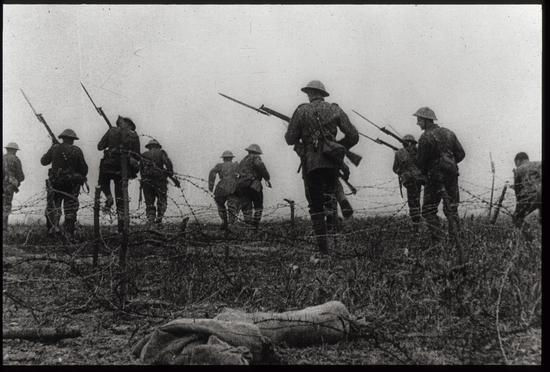
Following the opening battles of 1914, the First World War in Western Europe quickly bogged down into trench warfare with the opposing armies dug in, facing one another from a complex series of trenches across a blasted ‘No Man's Land’, defended by lookouts, barbed wire and guns. Artillery, snipers, grenades, mines, machine guns, gas attacks, and sickness including the dreaded “trench foot” took a great toll.
Our first stop of the day was Vimy Ridge Memorial, a short 20 minute drive from Arras, and the site of one of Canada’s greatest accomplishments of the war. After two unsuccessful Allied attempts to dislodge the Germans from this heavily fortified height, four Canadian divisions, fighting together for the first time, seized the ridge on 12 April, 1917 after four days of intense fighting. Meticulous preparation, the use of advanced technology, teamwork, and the sacrifice of thousands of Canadian lives led to this remarkable result. It was an important turning point for Canada, both in the war and as a country. This victory came at a high cost: 3,598 Canadians lost their lives, and 7,000 were wounded. April 9,1917 (the first of four days of the battle) is still the bloodiest day in Canadian military history.
We toured the Visitor Centre where university students from Canada come to work as guides for 4 month terms. We explored deep tunnels originally dug by the French and British troops that take you down a steep set of stairs to a modest depth of about 5m below the fighting. We learned that these “shallow” tunnels were mostly used for troops to position themselves for battles without being seen by the enemy. Many other tunnels that are now closed to the public were up to 30 meters deep; these were used to stay safe during intense artillery barrages and on some occasions to smuggle explosives under the front lines of the enemy - massive craters from these tactics still dot the 750km Western front.


The Visitor Centre exhibit includes a sculpture of the monument made of 11,285 Lego pieces - one for every soldier named on the Vimy memorial - each a Canadian who died during the war with no known grave. The monument is located at the peak of the ridge overlooking the Douai plain which is a strategically rich coal field and key supply point for whoever holds the ridge. While driving the 2km up the treed slope you get a sense of how difficult this ground was to capture; climbing ever higher with trench lines every 100m or so as you reach the peak of the ridge. The challenges of the soldiers on that Easter weekend to cover the same distance over 100 years ago must have been immense. The monument is built of dual marble columns that seem to glow, adorned with statues and can be seen for miles.
The Somme
Next, we travelled to the Somme, the site of one of the largest battles of the early war, fought from July to November, 1916. The five month battle was one of the bloodiest of the war and serves as a stark reminder of the futility of the war in general. This section of land was traded back and forth between the Allies and Central powers through the years and was involved in the final phases of the war in 1918. The amount of destruction is immense. Olivier described the area as total armageddon. Pictures of the area during the war show there was not a tree in sight, only mud and trenches for miles upon miles really brings home the misery of war.


A uniquely Canadian story
Just before we stopped for a quick lunch we learned of a soldier named James Richardson, a 20-year old piper from Vancouver who fought in France and ultimately at the Somme. He fearlessly encouraged his comrades forward by marching in front of them, playing his bagpipes in the face of enemy fire, inspiring them to get up and continue their attack, which was ultimately successful. Later in the day, James realized he had left his bagpipes at or near the front lines and decided to traverse the battlefield to recover them. Sadly, Richardson never returned and was presumed to have been killed. For his actions, he was awarded the British Empire's highest medal for bravery and valour, the Victoria Cross. This fascinating story doesn’t end here; his pipes were eventually recovered and put on display in Scotland, where they remained until a historian from Canada recognized them. They are now on display in the Victoria Parliament. The Sharps will be making a pit stop there next time we’re on Vancouver Island to see the full circle of this remarkable story.
Beaumont-Hamel
This is the site of the Newfoundland regiment memorial. This preserved battlefield, dedicated in 1925, is an amazing facility with many trenches still intact and a large caribou statue overlooking no man's land.


At 7:30 a.m., on July 1, thousands of British, French, Canadian and other commonwealth troops began their advance across No Man's Land in broad daylight toward the German positions to open the Battle of the Somme. The result would be slaughter—more than 57,000 British and Commonwealth soldiers were killed, wounded or missing—the heaviest combat losses ever suffered by the British Army in a single day. The sector of the front at Beaumont-Hamel where the Newfoundland Regiment would see action was supposed to be taken by surprise, but the Germans knew the attack was coming. As they walked into the hail of machine gun and artillery fire, it was said that many of the Newfoundland Regiment tucked their chins in, almost like they were walking into the teeth of a blizzard back home. As the Newfoundlanders advanced toward the enemy, there was a tree partway down the slope that marked the spot where German fire seemed to become particularly intense. This gnarled tree was nicknamed the "danger tree" by the Newfoundland troops and it marked the spot where many of them would fall that morning; there is a replica tree in its place now. The Newfoundland Regiment would be practically decimated in less than half an hour of intense German fire: Of the 800 men in the regiment only 68 would report for roll call the following morning.
The Battle of the Somme was in many ways a watershed event for Canada during the war. The great courage and accomplishments of Canadian soldiers helped confirm their reputation as first-rate front line troops. After these hard fought lessons, the Canadians were transferred to Vimy Ridge. Beginning in the spring of 1917, our soldiers would put together an unbroken string of battlefield successes that culminated in them playing a leading role in the Allied offensives in the last hundred days of the war that would finally end the conflict in November 1918.
Tolkien
One of Ian’s favourite authors, J.R.R Tolkien, fought in the battle of the Somme and this experience heavily influenced his further life and his writings. The enduring theme of Tolkien’s writing is that light is stronger than darkness and that camaraderie of the normal soldier is a powerful force in the face of unimaginable destruction. Key examples include the relationship of the Fellowship in the story and the ruined landscapes of the Dead Marshes mirroring the muddy mess of the trenches of the Western Front. Lady Galadriel remarked, “Even the smallest person can change the course of history”. His writing also reflects the psychological toll of war, such as the "invisible wounds" of post-traumatic stress and the dehumanizing effects of mechanized warfare. Having lived through the war Tolkien knew life would eventually recover and that the light would prevail, though he also knew that carrying on with life could be very hard, as many soldiers that survived still suffered from wounds both seen and unseen that they would be burdened with for the rest of their lives. Samwise Gamgee recalled in one of the darker moments of the story “How could the world go back to the way it was when so much bad had happened? But in the end, it’s only a passing thing… this shadow. Even darkness must pass.”
Amsterdam & Our First Real Travel Hiccup
We loved our time in Amsterdam, and ended up spending several more days there than originally planned. As we embarked on planning for future phases of our trip, Ian belatedly realized he did not have enough blank pages left in his passport to hold the visas required, for example, requiring two adjacent blank pages (eyeroll - yes this should have been on our radar before leaving home). Turns out, the only way to get a fast track new passport, is to do so in Canada (double eyeroll). So - Erin and the boys were able to see more of Amsterdam than originally planned while Ian made a 77 hour trip to Toronto and back to get a new passport. Thanks to Grandpa Hugh and Daka for putting him up/putting up with him. We knew we would need a contingency budget for something…. Anyway this blog is also partly delayed due to this hiccup.


While in Amsterdam, we visited the Anne Frank house, including an introductory classroom program that was really well done and helped us put Anne’s life in context and bring her to life for us. We then toured the Annex where Anne and her family hid for two years before being discovered and sent to German camps where seven of the eight people who hid together were killed (only Anne’s father Otto survived and later published Anne’s diary). Anne would have been a similar age to Finlay and Jasper when she went into hiding.
We took a canal cruise of the Light Festival that decorates Amsterdam each year at this time - did you know Amsterdam has more bridges than Paris and more canals than Venice?? We also explored the city as locals do - by bike - finding we could get anywhere by bike on dedicated paths and really impressive infrastructure giving bikes the predominant right of way. We visited the Van Gogh Museum to see many of this Dutch artist's works on display together.


The NEMO (one of Europe’s best science and technology museums) was fascinating - it got us thinking about the unique science challenges associated with being in a city that is mostly below sea level when climate change is raising ocean levels, had us become chemists to build rocket fuel, and let us build circuits, chain reactions, bikes, bubbles and so much more. “Touch everything” is such a refreshing way to invite kids into a museum - their exhibits felt endlessly fun! The kids spent 2 days exploring the exhibits!
Jasper
Dad and I did a Coca Cola and Mentos experiment - we made an explosion in a small shower. The reason we did that was because we were learning about volcanoes like Mount Vesuvius. I liked the ferris wheel in Arras in the town square for the Christmas market. We also found some poutine there (not real though the fries were not hot). My favourite part about Amsterdam was the NEMO science centre - I liked the chemistry lab and the bubble experiments the best. I also really liked the giant chain reaction, building water dams and that you could build your own circuits.
Finlay
When we were in Arras we learned about the first World War. Something I didn't know beforehand was that India was in the war. Well it was mainly just the countries that were under control of the British. One of the most famous battles that the Canadians ever won was also in World War One: The battle of Vimy Ridge. When we were in Amsterdam we went to this really cool science museum called the NEMO. One thing that was really cool about the NEMO was that it was very interactive like you could do so many things. We even went there twice and we were still very busy. My favourite part of the museum was an exhibit that studied your reaction time, my record was 0.770 seconds.


I really look forward to your blogs!
Have a wonderful Christmas with Annie and Miguel!
So enjoying these missives! Especially Jasper's and Finlay's commentaries. Hope the next few weeks are wonderful.
always a treat to read about your adventures!!
Merry Christmas Sharp family!! May you have a wonderful holiday season!!